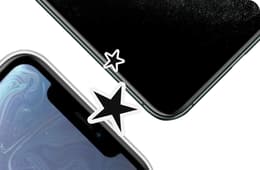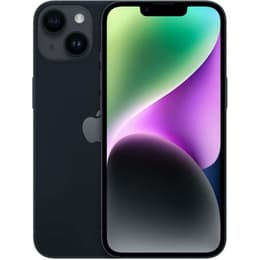
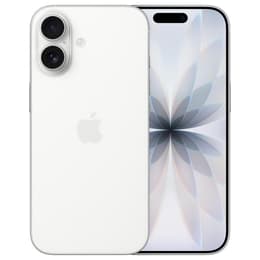
違いを一目で確認
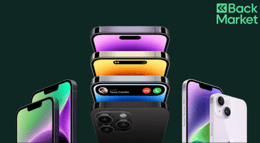
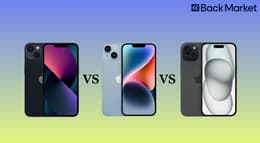
The iPhone 14 (2022) and iPhone 17 (2025) represent significant milestones in Apple's smartphone lineup, separated by three generations of hardware and design evolution. While both devices run on the iOS platform and provide a familiar user interface, the newer model introduces an expanded screen space, a faster processor capability, and modernized connectivity features.
Understanding how these changes impact daily tasks helps users select the model that matches their practical requirements.
購入可能なモデル
カラー
容量 (GB)
スコア
耐久性
When evaluating hardware longevity and support timelines, both smartphones offer robust build qualities designed to withstand years of regular use.
- Release timeline and support: The iPhone 14 launched in late 2022, while the iPhone 17 debuted in late 2025, giving the newer model a three-year advantage in long-term software update cycles.
- Software longevity: Both devices receive regular operating system updates, though the iPhone 17 will maintain active software and security support further into the future due to its recent release date.
- Practical lifespan: Solid aluminum frames and water-resistant constructions mean both models hold up well over time, making quality-assured refurbished options from Back Market a sustainable choice for extending device life cycles.
販売年
2022
2025
最新OSに対応
はい
はい
OS
iOS
iOS
折りたたみ
いいえ
いいえ
パフォーマンス
Day-to-day operation, multitasking, and battery endurance vary noticeably based on the underlying hardware capabilities of each generation.
- App loading and multitasking: The iPhone 17 handles demanding apps, graphics-heavy games, and intensive background tasks more smoothly and with higher thermal efficiency than its predecessor.
- Storage and memory: The iPhone 17 starts with larger baseline storage capacities to accommodate growing file sizes and media libraries, paired with increased memory for smoother switching between open applications.
- Battery behavior: Improved energy efficiency allows the iPhone 17 to sustain longer periods of video playback and heavy usage on a single charge compared to the iPhone 14's smaller battery capacity.
スクリーン品質
Display technology has advanced to offer larger viewing areas and smoother visual motion for daily media consumption and navigation.
- Display size and panel type: The iPhone 17 features a slightly larger 6.3-inch OLED display compared to the iPhone 14's 6.1-inch screen, delivering deep blacks and vivid colors.
- Refresh rate and smoothness: The iPhone 17 introduces a 120Hz adaptive refresh rate that makes scrolling and animations appear significantly smoother than the standard 60Hz rate on the iPhone 14.
- Outdoor visibility: Higher peak brightness levels on the iPhone 17 ensure that text and images remain legible under direct sunlight conditions.
解像度
1170 x 2532
2622x1206
画面の種類
Super Retina XDR OLED
Super Retina XDR
オーディオビジュアル
Photography and video recording capabilities differ in resolution, versatility, and performance during challenging lighting conditions.
- Camera sensor resolution: The iPhone 17 upgrades to higher-resolution sensors for both main and ultra-wide lenses, capturing finer details in everyday snapshots.
- Low-light photography: Enhanced image processing and larger sensors allow both devices to gather more light in dim environments, though the newer model reduces digital noise more effectively.
- Audio and video tools: Improved microphone arrays and advanced video stabilization make the iPhone 17 well-suited for crisp voice recording and steady motion capture.
メインカメラ
12 megapixels
48 megapixels
フロントカメラ
12 megapixels
18 megapixels
その他
Physical dimensions, connector types, and wireless standards shape the day-to-day handling and connectivity experience.
- Charging and ports: The iPhone 14 relies on a Lightning port, whereas the iPhone 17 adopts the universal USB-C standard for wired charging and data transfer.
- Wireless connectivity: The iPhone 17 incorporates newer Wi-Fi standards and modern cellular modems for faster downloads and more stable network connections.
- Handling and weight: Both models maintain comfortable, pocket-friendly profiles, with slight variations in thickness and weight distributed evenly across aluminum and glass frames.
重量
172 g
177 g
画面サイズ(インチ)
6,1
6.3
ネットワーク
5G
5G
デュアルSIM
シングルSIM + eSIM
eSIM
SIMカード
SIMフリー
SIMフリー
コネクタ
Lightning
USB-C
コミュニティの評価
User feedback on community forums highlights distinct preferences for each device. Owners of the iPhone 14 frequently praise its reliable day-to-day functionality, comfortable physical size, and dependable build quality. Common discussions note that while it handles standard tasks easily, heavy users may need to recharge more frequently during long days away from an outlet. Conversely, users of the iPhone 17 often emphasize appreciation for the fluid display motion, extended battery endurance, and the convenience of universal USB-C connectivity. Some discussions point out that the larger physical footprint requires a brief adjustment period for users transitioning from smaller form factors.
Users prioritizing smooth visual motion, longer battery endurance, and future-ready connectivity may prefer the iPhone 17, while those seeking a compact, everyday communication tool for standard tasks will find the iPhone 14 well-suited to their needs. Exploring quality-assured refurbished models provides a sustainable choice for acquiring either device while reducing electronic waste.